



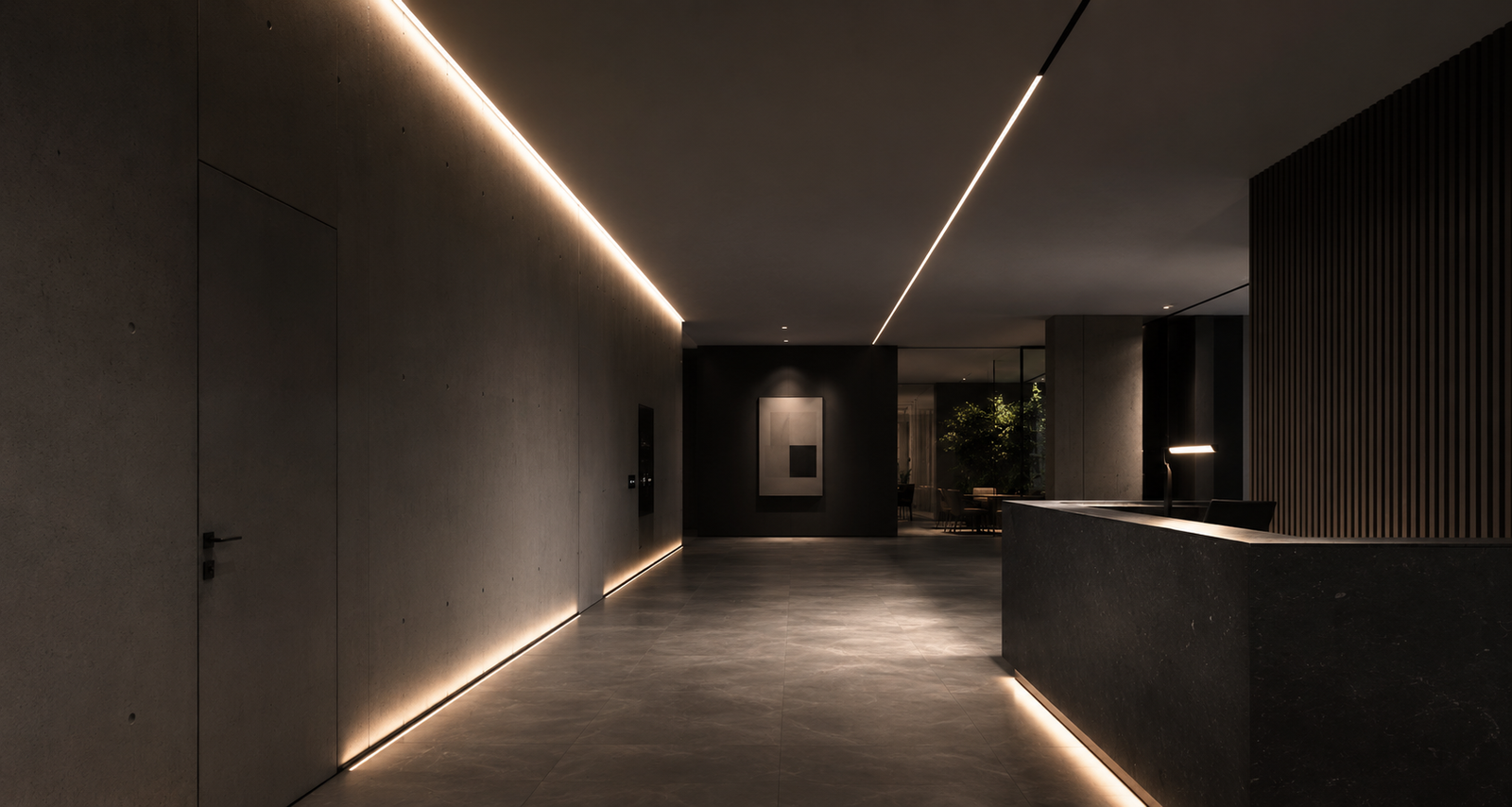
How Lighting Shapes Modern Architecture
How Lighting Shapes Modern Architecture
Architecture is often described through form, material, and proportion — yet one of the most powerful elements shaping how a space is experienced remains invisible until it is carefully designed: light.
Lighting has evolved far beyond its traditional functional role. In contemporary architecture, it defines atmosphere, enhances geometry, influences human perception, and creates emotional connection within a space.
A well-designed lighting concept can transform even the simplest interior into an experience that feels refined, balanced, and timeless.
At Mr Lumen, we believe lighting should not compete with architecture. Instead, it should quietly strengthen it.
Light as an Architectural Material
Modern architects increasingly treat light as a material rather than simply a technical necessity. Just like concrete, wood, glass, or steel, lighting contributes to the identity and rhythm of an interior.
The way light interacts with surfaces determines how textures are perceived, how volumes are understood, and how people emotionally respond to a space.
Soft indirect lighting can create calm and comfort. Precise directional light can highlight materials and structure. Linear lighting systems can visually guide movement through architecture while maintaining a clean and minimalist aesthetic.
The Importance of Visual Comfort
While aesthetics remain essential, lighting performance is equally important. One of the most common mistakes in interior lighting is focusing purely on brightness without considering visual comfort.
Excessive glare, poor beam control, and inconsistent illumination can negatively affect concentration, productivity, and overall wellbeing.
- Offices and workspaces
- Hospitality interiors
- Retail environments
- Residential projects
- Public architecture
Micro-prismatic diffusers, carefully engineered beam angles, and high-quality LED components help create spaces that are both visually comfortable and technically efficient.
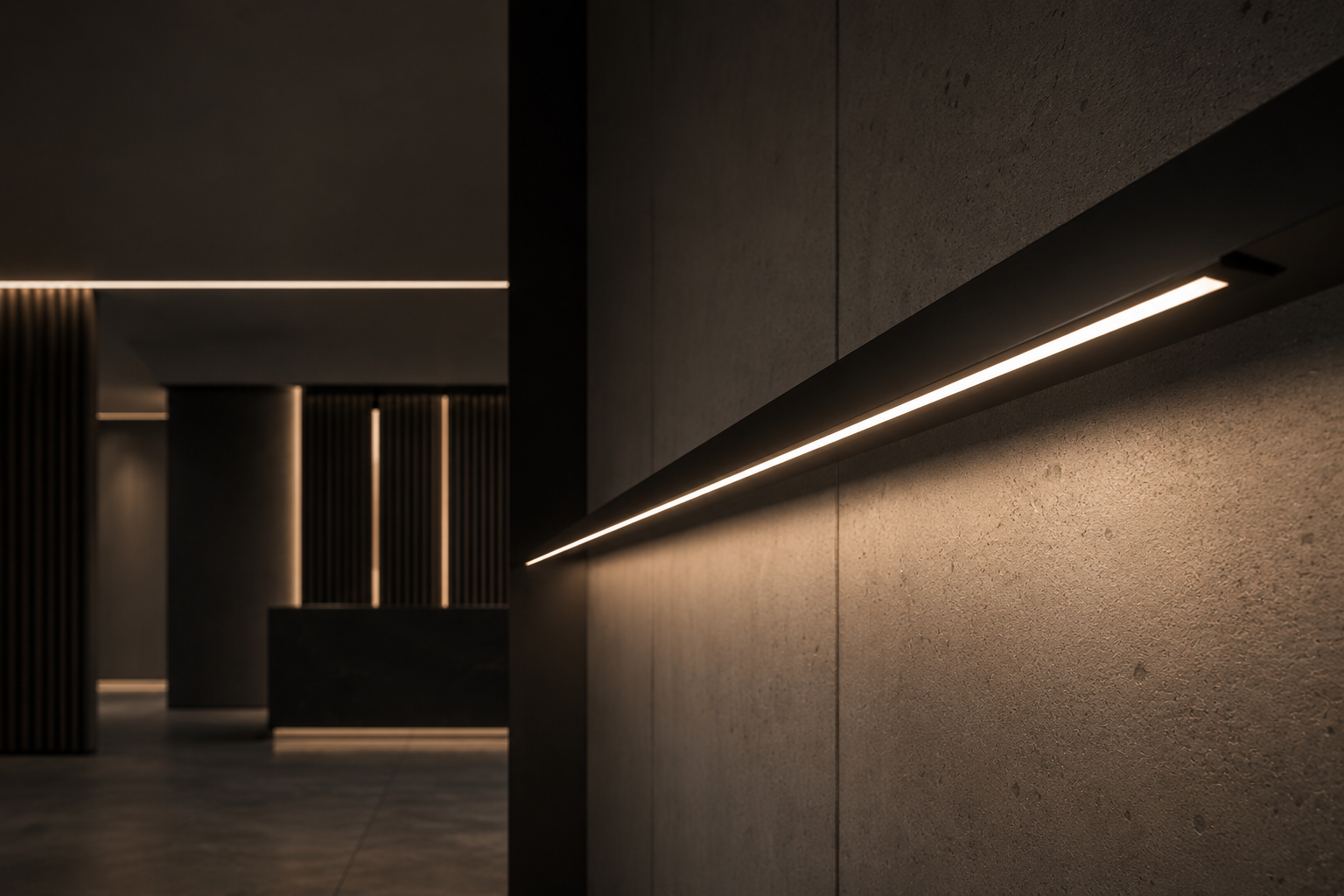
Why Linear Lighting Defines Contemporary Interiors
Linear lighting systems have become one of the most significant elements in modern architectural lighting. Their popularity is not simply a trend — it is the result of their flexibility, clarity, and ability to integrate naturally into different environments.
Architects and designers choose linear luminaires because they create clean visual lines, support minimalist architecture, provide uniform illumination, adapt easily to custom dimensions, and work in both functional and decorative applications.
Suspended linear systems can define workspaces within open-plan offices. Recessed profiles can emphasize architectural geometry without introducing visual clutter. Surface-mounted luminaires can create elegant lighting compositions while remaining highly practical.
Lighting and Human Experience
The relationship between lighting and human psychology is becoming increasingly important in modern design. Colour temperature, light intensity, and contrast all influence how people feel within a space.
Warm lighting creates intimacy and relaxation. Cooler lighting supports concentration and alertness. Balanced lighting improves comfort, orientation, and spatial perception.
Today’s lighting systems allow greater flexibility through intelligent control solutions such as DALI, Casambi, tunable white systems, and automated scene control.
Customisation in Architectural Lighting
No two architectural projects are identical. Every interior presents unique technical, aesthetic, and functional requirements.
Because of this, custom lighting solutions have become essential for architects and designers seeking complete design consistency.
- Custom dimensions
- Special finishes
- Unique mounting methods
- Integrated control systems
- Specialised optics
- Tailored output levels
Architectural lighting today is not simply about selecting a product from a catalogue. It is about creating lighting systems that support the overall vision of a project.
Conclusion
Lighting is no longer an afterthought in architecture. It is one of the defining elements shaping how spaces are experienced, understood, and remembered.
The best lighting solutions are often the least intrusive — quietly improving atmosphere, revealing materials, enhancing geometry, and supporting human comfort without overwhelming the architecture itself.
Need lighting for your next project?
Let’s create a lighting solution that fits your architecture, technical requirements, and visual direction.